Look up feedback in wikipedia, and you´ll find a rather technical and abstract story. This blog article is not technical or abstract. It looks at feedback you might want to recieve as a model, discussing why, how and where to get feedback, and how to receive it.
Why?
This is the simplest question. Feedback, if used right, can help you improve your performance. It is a very quick way to learn and greatly directed to your specific needs. If feedback is so great, you might ask, how come it is used so little in the modeling industry? That's because feedback does not come naturally, you'll have to organize it. Some agents do that, but not all of them do. Free lance models hardly ever do it. Why not start now?
Where to get it?
Who do you want feedback from? I would think you'dd like feedback from someone with experience in the business, who has seen many good and not-so-good models. Your agent? Yes, that's one person that fits the description. But there are more; every photographer, every make up artist and every styling artist fits that description. That means that potential feedback is all around you! You only need to get it.
Internet communities are also a place to get good feedback, based on the pictures you post in the community. Do note though that some people tend to forget about nettiquette and some feedback may be very harsh. Don't let it get to you. Ignore the blunt ones and learn from the good ones.
How?
There is a catch though. Photographers are not very likely to give you feedback during the shoot. Right or wrong, they fear that feedback will influence the result of the shoot. So try to get feedback after the shoot, but tell the photographer in advance that you want feedback. That way, he (and the styling artist and the make-up artist) can look at you with different eyes and give you constructive feedback. In fact, he might even improve his directions as he looks different. When recieving feedback, be open to it. Sometimes, feedback may hit you hard at first and some people are a bit cruel in communicating feedback. Let's face it, photographers are not in the business because they are great communicators; their talent is photography. In any case, don't go all defensive (see links below for more tips), but listen, remember and use whatever you can use. I'm sure you'll get some great tips.
More resources:
Giving and receiving feedback
Giving and receiving feedback for academics, with practical implications for non-academics too (pdf)
Showing posts with label modelling tips. Show all posts
Showing posts with label modelling tips. Show all posts
Thursday, March 5, 2009


Friday, January 9, 2009
Modeling tips: Hands!
This article is not about hand posing. Hand posing is an art in itself. This article is about posing in general and the position of the hand when you pose. Awkward? Maybe. Trivial? No way! Many models focus on so many things when they’re posing that they forget about their hands. That’s a petty. A misplaced hand can ruin a good picture, whereas a well-placed hand can make a picture work. Obviously, this is the photographers task, but why wouldn’t you look after your hands too?
 Principles
The simplest principle is that the hand should not disturb the way you look. It should either be out of sight or nicely aligned with your arm (see picture to the left). For most shot, this principle is sufficient. Sometimes however, your hand needs to add to the emotion you’re expressing. This is the time to over-act. Dramatic poses can really be enhanced by large and even more dramatic gestures with one or both hands. Spread your fingers to draw attention to your hand. If the pose is more subtle, adjust the pose of your hand likewise, keeping your hands small and close to the body.
Hold it!
If you are using props, you have an entirely different use for your hands. For inexperienced models, this is a great help. Holding a prop often helps you to put your hand in a natural position. But do keep in mind that this requires your attention as well. Hold the prop the way you would in real life. And practice in front of a mirror. That will make you understand the link between what you feel and hopw you look.
PrinciplesThe simplest principle is that the hand should not disturb the way you look. It should either be out of sight or nicely aligned with your arm (see picture to the left). For most shot, this principle is sufficient. Sometimes however, your hand needs to add to the emotion you’re expressing. This is the time to over-act. Dramatic poses can really be enhanced by large and even more dramatic gestures with one or both hands. Spread your fingers to draw attention to your hand. If the pose is more subtle, adjust the pose of your hand likewise, keeping your hands small and close to the body.
Hold it!
If you are using props, you have an entirely different use for your hands. For inexperienced models, this is a great help. Holding a prop often helps you to put your hand in a natural position. But do keep in mind that this requires your attention as well. Hold the prop the way you would in real life. And practice in front of a mirror. That will make you understand the link between what you feel and hopw you look.
Wednesday, December 24, 2008
Modeling tips: look sexy
 Sex sells. No need to be shy about that. Advertisers use models that look sexy to sell their products. If a model wants work, she (and he too) will need to be able to look sexy. And it has to show from the model's portfolio as well.
Who needs nudity?
Don't go filling up your porfolio with naked pictures of yourself, that's not how it works. Nothing wrong whith nudity, but being naked and looking sexy is not the same thing. In fact, most of the good nudity photos are not even erotic, they are figurative. And you can look sexy with your clothes on, probably even sexier than you look naked. The suggestion of nudity can arouse more than actual nudity. Likewise, a seductive look can even make a close portrait look sexy.
Color code
There is ample annecdotical and scientific evidence that men associate the color red with sexy. So, red clothes and red lipstick will help you look sexy. Blushing cheeks help as well. Psychological tests have shown that even a red background adds to the sexieness of the person pictured. For male viewers that is, women tend to be less sensitive to this particular color association.
Feel sexy = look sexy
It sounds simple and it is. If you feel sexy, you will look sexy. I will make your looks more seductive and send natural blushes to your cheeks. So, forget about that photographer and anyone else in the studio and start thinking about the last time you felt particularly sexy. No matter what it is, as long as it works for you. DOn´t get carried away though.
Let mother nature help you
Did you know that mother nature has a simple trick to help people reproduce? Women look sexier in the days after thier ovulation. That's when they are fertile, so that's when moter nature wants them to breed. So mother nature makes subtle changes to your looks during that fertile stage. They are hard to notice by themselves, but they do make you look sexy. So if you can, plan a sexy shoot halfway your period. sorry, this one is useless for male models.
Saturday, November 22, 2008
Modeling tips: Be confident
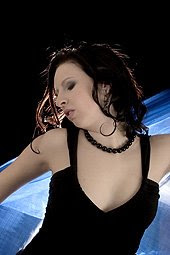 Confidence. If anything is important for models, confidence is. Without it, you won’t get far, no matter how pretty or talented you are. True, most people that are talented, become confident because of their talent. But this is not always true. For some, it’s easier than for others. Luckily, confidence can be trained, and this article may help you training it.
Kill that parrot
Did you know you have a parrot on your shoulder? The silly bird keeps telling you what other people think about you and he does so in a very negative voice. And you know what? The parrot is wrong 99% of the time. If your hair is a little bit out of shape for instance, the parrot will tell you that people think you look ridiculous. Wrong. Most people are far too busy with their own little problems to notice the minor things about your hair. Other people may notice it, but still think you look good, and yet other people might even like your new hairdo. Get rid of that parrot, stop worrying about what other people might think.
Fool yourself
Your mind does not know the difference between imagination and real things. You can use that. Act as-if you were confident. Ask yourself how you would walk if you were confident, ask yourself how you would talk if you were confident. Act like that and you will become confident. Keep telling yourself you can do it. Sounds silly, doesn’t it? But it works, try it, you’ll be surprised.
Stand tall and smile
You can do the same in body language. Stand with your feet slightly apart, take a deep breath and keep that position, straighten your back and neck. Now you look confident. And if you look confident, you’ll feel confident. People will treat you as if you were confident, thus building your confidence even further. Stop thinking this looks silly, it doesn’t. That’s just the parrot talking. Once you stand tall, put a smile on your face. Not a frozen one, just smile to people you pass by every now and then. Smiling people look better and get smiles in return, making you feel even better. And remember, smiles are free.
Face your fears
Are you nervous about something in particular? Ask yourself “What’s the worst that could happen?”. Just go out and do it. Overcoming fear is the ultimate boost for your confidence. Defeat your fears, and you’ll feel inconvincible.
Saturday, November 15, 2008
Modeling tips: care for your lips
 Lips are important to models. Well-shaped and well-groomed lips can make a lasting impression and add to your sex-appeal. At the same time, lips are among the most exposed areas of your skin and very vulnerable at the same time. Your lips need good care, and it’s you who should provide it. The good thing is, it does not have to be expensive to be good.
Protect them
Lips need protection from the world around them, especially from heat, cold, sunburn and dry air. Petroleum jelly or Vaseline is a great and inexpensive protector and healer of dry skin in general and lips in particular. Use an old toothbrush to gently rub in the Vaseline a couple of times a day if you want to heal dried lips. You may want to mix the Vaseline with one or two tablespoons of a tasty (sweet or fresh) sauce, to enhance the flavor. For summer holidays or winter sports, use a lip balm with a high sun protection factor, as lips tend to burn badly in the sun.
Caress them
Want to give your lips a good time? Mash a quarter of a ripe papaya to a juicy paste. Lie down on a towel and apply a generous amount to the lips and the skin around the lips. Leave it on for 10 to 15 minutes. Next rinse the paste off and apply Vaseline or lip balm. The exfoliating enzymes in papaya help to soften and refine lip lines.
Make them work for you
When applying lipstick, use a brush. It provides a more even distribution and will reduce the amount of lipstick used. Before applying your lipstick, apply foundation on the lips or use a lip liner. This prevents the lipstick from 'bleeding'.
If you have big lips, colors like purple, brown and bronze will look good on you. If you want to make them look smaller, make use of deep colors. They make the lips recede. Shiny lipstick on the other hand will accentuate the size of your lips. If your lips are small, apply a bit of lip gloss or Vaseline on the middle part of the bottom lip, and use light colors. This make your lips look bigger.
More tips
More tips
Tuesday, November 4, 2008
Modelling tips: plan your career (3)
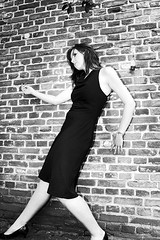 Part 1 of this series was about making plans, part 2 about checking on them. Part 3 of planning your career is about deviating from your plans. This happens more often than not. In fact, plans sometimes seem to be made to be able to deviate from them. Why? Because plans involve the future, and the future is intrinsically unpredictable. Things can happen. Good things, bad things, things you never thought of. And if they happen, it may be wise to deviate from your plans.
Say you planned to start your career on the catwalk. Maybe later, you were thinking, you were going to switch to magazines. Then a magazine comes along, wanting to hire you for an editorial. Will you refuse because it doesn’t fit your plan? No you won’t. Assess the offer, and if it is any good, forget about the plan: deviate! If this happens once or twice, it’s okay to deviate, while in the meantime following the plan as, well, planned. If it occurs more often, you’ll have to think about changing the plan. You just might be more fit for magazines than for catwalks. Or maybe you are not, but coincidence has granted you a head start in magazines and you should grab the opportunity.
How will you know when to deviate from your plans and when to change them? You won’t. There is no such thing as a golden rule here. You can ask other models and photographers around you what they think, but remember that they will give you opinions rather than facts. On the other hand, if five or six experienced people share the same opinion, it might as well be a good one. If you’re with an agency, go ask them. They know a lot, and your interest is their interest. Unless of course, you are with a catwalk-specialized agency. After collecting the opinions, make a choice. It may not be the right choice, but you’ll have to make one. It’s no use waiting for the ‘right’ information to come by, because you’ll never have enough information. Besides, the ‘right’ information has the peculiarity of coming buy after you made your decision. It always does.
A couple of common-sense issues should be kept in mind though. If you’ve invested heavily in a catwalk career and it hasn’t paid off, ask yourself why. Is catwalk the right choice for you? Is it just too early for pay offs? Do you expect pay offs in the near future? Do they outweigh the benefits of switching to magazines? No easy answers here, I’m sorry. When in doubt, it’s okay to follow two tracks for say two, three months. If your catwalk pay efforts do not pay off in these months, or if magazines keep approaching you, you’ll know what to do. Don’t stay on two tracks for too long though, dividing your attention may distort your focus.
Saturday, October 11, 2008
Modeling tips: plan your career (2)
 Last week's article was about setting goals, defining steps and taking action. This week, I'll discuss the evaluation of your plans and actions. Normally, you wouldn't evaluate after a week of course, so read the article now and bookmark for later use.
When?
Many people seem to wonder when they should evaluate their goals. In fact, it is pretty obvious. Remember what the "T" in S.M.A.R.T. means? Right, timely. It means that the definition of your goals include a deadline. And when the deadline is there, the moment of evaluation has come as well. Of course, if your reach a goal before the deadline, don't hesitate to evaluate before that deadline. Since all your goals are measurable, it won't be hard to note if you've reached one.
What?
Evaluation. It sounds like something very complicated for high-educated people. It's not. In fact, you do it all the time in daily life. Did I like that meal? How do I look in that dress? How much money do I have left? Was that movie any good? Answering these questions means you're evaluating. Evaluation is nothing more than posing the right questions and answering them as good as you can. It's the same with goals: Did I reach them? Why(not)? Did I follow the steps? Did I take the actions I defined? Did I take other actions instead because an opportunity came by? And so on.
Note that there are no right and wrong answers. Also note that you are not on trial. There is only one person you are evaluating for, and that is you. So be honest and serious. No socially desirable answers, you'll be fooling yourself and yourself alone.
Then what?
So, okay, I've answered the questions, now what? First of all, be happy and proud of every goal you reached. Great work, well done. Now go find new, higher, goals to follow up on your success. Second, learn from the goals you didn't reach? Why didn't you? Were they set too high? Adjust them. Were the steps insufficient? Add more steps. Didn't you work hard enough? Work harder. Was it bad luck? Are you sure? Hope for more luck next time and think of how you can increase your luck.
In short: every time you reach a goal or deadline, evaluate, learn and adjust your planning. Plans are dynamic in nature, because they involve progression. Don't be afraid to adjust your plans, be worried if there is no need to.
Friday, October 3, 2008
Modeling tips: plan your career (1)
Have you ever noticed that most models just hope for a brilliant career, but don't have a firm plan to realize their dreams? Some models do work hard and grab any chance that comes along, but models that actually set out to reach specified goals are rare. In many types of careers, planning is common, so why not in modeling? It is a serious profession, you know? And what's more, competition is tough in the modeling world. So why not make the difference? And it's not as hard as you might think
Set goals
The first thing to do is to tell yourself where you want to be in a year, in two years and so on. Be ambitious but realistic. If you aim too low, you won't reach high. If you aim too high, you might get frustrated. Make sure your goals are S.M.A.R.T. (Specific, Measurable, Attainable, Realistic and Timely, see the link below for more information) and write them down.
Define steps
Setting goals is step one, but how do you reach them? Think. For most goals you can find out for yourself what steps are needed to reach them. If you can't, find help. Ask your agent or ask a model that has already reached a similar goal. Define your steps as actions and set deadlines for them. Note that some steps have to be carried out in a particulair order. The order and the deadlines together create something that looks like a scheme. This is your path to success, now you'll just have to follow it.
Take action
This is the hardest part for some, and the easiest for others. At some point, you will gain nothing in further planning. It's time to act. Call that agent or photographer you planned to work with. Register that url for your own website. Select the pictures for your comp card. Once you finished a step or reached a goal, mark it on your list. It's very rewarding to see the number of marked items on your list grow.
Obviously, you should not stick to your planning too tight. If an opportunity comes by that's not on your list, forget the list. Grab that opportunity! Keep in mind that planning is a tool, not a goal in itself.
Next week: part 2...
more resources:
about S.M.A.R.T.
Thursday, September 18, 2008
modeling tips: Have you got what it takes?

Have you ever wondered whether you've got what it takes to become a good model? Sure, anyone can stand in front of a camera and have a picture taken. Technically, that makes you a model. But you know damn well that there's more to it than that. I am talking a modeling career here.
Many models never think about their abilities. They just dream. Getting famous, getting rich, having your picture in a magazine. Nothing wrong with dreaming, but wouldn't you like to know about the reality level of your dreams? Here's a simple test. Five statements. All you have to do is judging whether they are true or false.
1. I only work hard if absolutely necessary
2. The only thing a model needs is a pretty face and a nice body
3. Running a business is not my piece of cake
4. I do business with people because I like them
5. I can’t stand extreme circumstances (heat, cold, fear etc)
3. Running a business is not my piece of cake
4. I do business with people because I like them
5. I can’t stand extreme circumstances (heat, cold, fear etc)
Did you state 'true' to either of these statements? Start worrying, you may have an unrealistic view of the world of modeling or you might not have the skills. Not all is lost though. Perceptions can be changed and skills can be learned. But be aware there is extra work involved.
If you entered 'false' at all statements, you're on the right track. No guarantees for a splendid career though, but at least you're up to it. Now all you need to do is put your mind to it, start working (hard, real hard) and pray for luck. Go get 'em!
Saturday, September 13, 2008
Modeling tips: hold on to your props
 Some photographers like to use props. They might use them for a specific theme, to create a natural looking image or just because it increases posing possibilities. Props can really add something to a picture, if used properly. On the other hand, it’s pretty embarrassing to be pictured holding a guitar in a way you simply can not play it.
Today’s modeling tip is a very simple one: practice. If you’re planning a themed shoot, ask the photographer what props will be used and practice holding them. Use a mirror to check how you look. If you are not sure how to (hold a guitar, for instance), go look for images in magazines and on the web. Better still, ask someone who does know how to hold the specific prop.
For non-themed shoots, make sure that you know how to hold props in general. Below is a top ten (in no particular order) of items you might want to practice on. You might not have all of the items available at home, but that’s not the issue. You can practice your poses on anything of similar size. In fact, if your guitar-act is convincing on a broom, it will surely be convincing on a guitar
Stool or chair
cigarettes
flowers
food (fruit or candy)
a glass (wine, champagne, cocktail)
guitar
tools
studio equipment
sports equipment
weapons
Saturday, September 6, 2008
Modeling tips: Photographer types (7)
 Photographers, you need them for the pictures. Most of them are nice people, but they also have some peculiarities. If you know how to cope with these peculiarities, you’ll get the optimal results from your photo shoots. To help you with this, this blog publishes a series of articles devoted to photographer types. Every single photographer is a unique person. Nevertheless, knowing the type could be useful for models. None of the observations in this article imply that a certain type of photographer delivers higher quality. Each category contains both good and bad photographers. The mere fact that a photographer is shy, arrogant or flamboyant tells us nothing about the quality of his or her work. It does tell us something about the way they work though.
Some models may think that there is no need to adjust to the photographer. ‘Let them adjust to me.’ If that’s you, let me ask you whether you care about the result of a photo shoot. If you don’t, stop reading (and you might as well stop modeling too). If you do, why not take all the factors into account that you can influence?
The intuitive type
The intuitive photographer is more or less the opposite of the technical type. He knows nothing about sweet points, composition rules or lighting ratios. He just takes pictures. And somehow, these pictures turn out just fine. The intuitive photographer's mind is a black box. Not only to outsiders, but to himself as well. He'll look through the viewfinder to get the picture he wants, adjusting the camera's settings as if he knew exactly what he's doing. In fact, he hasn't got a clue, but he does get the picture he's looking for.
I admit, these guys (I know a couple of lady photographers of this type too) drive me crazy with jealousy. I study and experiment my ass off to get a decent picture, while they just click away and perform at least as good, and often better.
Dos and don’ts
To make things worse (for my jealousy, that is) intuitive photographers are easy to handle for models. Since they don't have to think about what they are doing, the can devote all their attention to the model. Not to posing, they don't have to think about that either. They simply chat and interact as if a photoshoot is a piece of cake. For you, as a model, it makes life a lot easier, as long as you keep in mind that modeling does require some effort.
You have to keep in mind though that the intuitive photographer is not extremely flexible. If you want something specific, just ask. It might fit within his intuition and he'll perform effortlessly. If it lies outside his intuition, you might as well give up right away. There is no way he can reason how to get to the result you're looking for. Don't try to push him at this point, it will only lead to mutual frustration.
Other types
Friday, August 15, 2008
Modeling tips: Duo Shoot

A Duo shoot involves two models. That sounds simple and it is simple. It does however imply a lot more than that. For a good duo shoot, one plus one is greater than two. The magic word here is interaction. A duo shoot benefits from the interaction between the persons involved. It may however also benefit from the explicit and intended lack of interaction. Much of this is up to the photographer, but the models can make an impact too.
Check the intention
The photographer or client that initiates the duo shoot probably has a certain idea behind the interaction in the shoot. They want to attach a certain feel to the pics. For commercial shoots, this will probably be either soft-sensual or shiny-happy-people kind of feel. For artistic shoots, these may also be appropriate, but the photographer may also have allienation in mind or want to adjust to a certain theme. Make sure you have the intention clear before the shoot, allowing you to practice poses and experession and look at examples.
Who's your partner?
If you can, meet the other model prior to the shoot. No need to engage in extensive pre-shoot practice, but it helps if you know each other and you might want to discuss your interpretations of the shoot. Having met is especially helpful if the shoot has a sensual feel to it. Do note that 'a sensual feel' does not have to depict sex or nudity. The sensual feel is often limited to suggestion. This still requires convincing interaction between the models, probably even more than in the case where nudity would be inolved.
Be an actor
Knowing the intended feel and knowing your partner, it all comes down to your acting abilities. If you have no acting experience, use your imagination. Pretend to be in love if that's the theme, and imagine how you would act. Copying the examples you have looked at in advance may also help. Make sure you make eye contact with the other model (unless the photographer explictly asks you not to). If the other model is more experienced, let him or her lead you and try to follow. You can copy parts of what he/she does, but don't copy all of it. The photographer hired two models, not a model and a mirror.
Friday, August 1, 2008
Modeling tips: get an agent (what?)
So, there you are. You've followed trough everything I told you last week and now you have 5, maybe 6 agencies offering you a deal. What to do?
Exclusive or not?
The first question is whether you want to be with one single agency, or several. There is no easy answer to this question. Logic tells us that more agencies mean more work, and more of a hassle as well. If you are represented by 3 agents, you will have to update schedules and coordinate portfolio shoots. So if you wanted an agency to get rid of the hassle, exclusivity may be the answer. If you are trying to maximize the number of shoots (and income), then you might want to have more agencies out there trying to find work for you. Unless of course you get a great deal from an internationally renowned agent to sign an exclusive contract.
Avoid scams
Make sure you check your agencies before signing up. Check BBB, look for blacklists and check out thier reputation on modeling discussion forums in your region. Contact models and photographers you know and ask them if they know the agency. Like with photographers, you can check in advance for not-ok signs (see my earlier article):
When picking an agency, take a closer look at the work of their photographers. Are they any good? Do they publish in magazines? Similarly, look at the models of the agency. Their achievements tell you a lot about what to expect for yourself. And obviously, look at the offer. How will they help you? Will they help you building a portfolio for instance? What's in the small print of the contract? What contract duration do they offer? It is generally not a very good idea for starting models to sign contracts with duration of more than 2 years.
More resources:
Exclusive vs non-exclusive, the arguments
about scams
BBB
why to get an agent
how to get an agent
Exclusive or not?
The first question is whether you want to be with one single agency, or several. There is no easy answer to this question. Logic tells us that more agencies mean more work, and more of a hassle as well. If you are represented by 3 agents, you will have to update schedules and coordinate portfolio shoots. So if you wanted an agency to get rid of the hassle, exclusivity may be the answer. If you are trying to maximize the number of shoots (and income), then you might want to have more agencies out there trying to find work for you. Unless of course you get a great deal from an internationally renowned agent to sign an exclusive contract.
Avoid scams
Make sure you check your agencies before signing up. Check BBB, look for blacklists and check out thier reputation on modeling discussion forums in your region. Contact models and photographers you know and ask them if they know the agency. Like with photographers, you can check in advance for not-ok signs (see my earlier article):
- The agency requires advance payments;
- The agent has no office;
- Agency commissions over 25%;
- The agency promises you the world;
- The agency does not comply to local regulations;
- Advertisements (most reputable agencies don't advertise. They simply don't have to).
Like with photographers, seeing these signs does not mean these guys are crooks by definition, but be extra careful if you see such a sign.
Aspects to base your choice onWhen picking an agency, take a closer look at the work of their photographers. Are they any good? Do they publish in magazines? Similarly, look at the models of the agency. Their achievements tell you a lot about what to expect for yourself. And obviously, look at the offer. How will they help you? Will they help you building a portfolio for instance? What's in the small print of the contract? What contract duration do they offer? It is generally not a very good idea for starting models to sign contracts with duration of more than 2 years.
More resources:
Exclusive vs non-exclusive, the arguments
about scams
BBB
why to get an agent
how to get an agent
Thursday, July 24, 2008
modeling tips: Get an agent (how?)

Finding an agent is much like finding a job: you check out what jobs are available, check on the companies you consider working for, make contact, have an interview, receive an offer and make a selection. It’s as simple as 1-2-3. Not convinced? Check the steps below.
Google is your friend
It seems ages ago that we had to bring out the printed yellow pages if we wanted to look up a company. Of course, you can still use this book, most firms keep updating their presence in the yellow pages. But you can also type ‘modeling agency’ and the name of your city or region in Google and you’ll find a large amount of firms to choose from. Note that not all these firms are actual modeling agencies. Some are, but some others offer ‘other services’ involving pretty ladies and some are just scams. You’ll pick out the first type pretty easily, the second is a little harder to recognize. If you’re in the US or Canada, check the BBB (see link below). Next week’s blog article will tell you more about things to look for and not to look for in an agency.
Contact them
This is very basic knowledge, but so many models don’t get it. Don’t wait at home (or in the mall) for some talent scout to find you. Go find them! Pick up the phone and tell them you want to meet them. Once you have the interview, make sure you are in time, bring a couple of good pictures and a Z-card (provided you have sufficient usable pics). You don’t need a completed portfolio yet, these guys know how to base their opinion on a couple of pictures, provided they are not shaken holiday snapshots of course.
During the interview, be you. There is no need to act as if you are someone else. They’re interested in you, not in someone else. More important, make it a two-way interview. This is not only about what you can offer them, you’re also there to find out what they can offer. How are their (former) models doing in the business? Can they show samples of the work of their photographers? Does the type of work they provide fit your wishes and character? Obviously, you will also want to know about payment and such practical stuff.
Be selective
Visit several agencies and await their propositions. Compare what they have to offer, and be critical about extremely positive promises. If it sounds too good to be true, it probably is. Next week’s article will also give you a couple of things in mind when choosing an agency.
More resources:
BBB
do’s and don’ts
More resources:
BBB
do’s and don’ts
why get an agent? (last weeks' article)
Thursday, July 17, 2008
modeling tips: Get an agent (why?)
 Some models simply make it on their own. Some models simply have the business skills an talents to make it as a freelance model. Other models need an agency to get their things done. But even if you have the talent to be a great freelance model, you might want to consider signing up with an agency. Here’s why.
No hassle
Let me guess. You want to focus on modeling, not on paperwork, sending bills, calling photographers to send your TFP-pictures, finding clients and so on and so on. That’s where the agent comes in. He (more often: they) takes care of this stuff you don’t want to loose your time on. The employees of the agency are your employees; they support you, allowing you to focus on what you do best: modeling.
But there is more. A good agent will not only take care of the hassle, they will do things you can not do yourself. They will help you build a portfolio, a reputation and even your skills. The bottom line is that they will earn money if you earn money, so they turn their efforts toward you earning money. It is in their interest that you have a great portfolio, that you get loads of exposure and that you get to work with photographers that you can learn from.
Clients
Let’s pretend you’re a client, looking for a model. Where would you go? Would you spend your precious time searching the web for someone specific or rather pay a modeling agency to do it for you? Clients go to modeling agencies. So if you want clients, go there too.
Better still, agencies work as a selection mechanism. Clients that go to booking agencies are the ones that are willing to pay for quality. So these are most likely to be professional clients; they will probably hire a good photographer as well, and a good make-up artist. They are also likely to be safe clients (check my earlier article on safety).
More resources:
Whats the big deal about being a signed model?
how to get an agent
choosing an agent
Thursday, July 3, 2008
Modeling tips: Photographer types (6)
Photographers, you need them for the pictures. Most of them are nice people, but they also have some peculiarities. If you know how to cope with these peculiarities, you’ll get the optimal results from your photo shoots. To help you with this, this blog publishes a series of articles devoted to photographer types. Every single photographer is a unique person. Nevertheless, knowing the type could be useful for models. None of the observations in this article imply that a certain type of photographer delivers higher quality. Each category contains both good and bad photographers. The mere fact that a photographer is shy, arrogant or flamboyant tells us nothing about the quality of his or her work. It does tell us something about the way they work though.
Some models may think that there is no need to adjust to the photographer. ‘Let them adjust to me.’ If that’s you, let me ask you whether you care about the result of a photo shoot. If you don’t, stop reading (and you might as well stop modeling too). If you do, why not take all the factors into account that you can influence?
 The artist
Photography is art. That is, some photographers use the reproduction technique ‘photography’ as a means of artistic expression. What was that again? Art. Uh, right, mmm’kay. Artist photographers have a very clear view of what they want. They work from a concept and stick to it. It is a petty that some artist photographers have trouble communicating their very clear view. They know exactly what picture they are looking for, but their main mean of communication is through images, not words. And of course, the things they are trying to put in the picture may seem a bit weird sometimes. But hey, that’s why it’s art.
Dos and don’ts
You really should work with one or two photographers of this type. It broadens your portfolio without taking the direction out of it. Working with art photographers is a great way to show your posing, acting and expression skills. These guys are typically beyond the everyday pics that anyone has in their portfolio. When I say one or two, take that literally. These pics tend to be pretty visible in your portfolio; don’t let them become too dominant. Unless you’re totally into this type of photography of course.
Since some of these artists have a hard time expressing themselves in words, make sure you study their work. This may help you understand their twisted minds and predict what it might be they are aiming at. Don’t be too sure though, artists tend to be pretty unpredictable. Like in finance, results from the past do not hold any guarantee for future outcomes.
Keep in mind that artistic photos sometimes derive a value from shocking viewers. Or from deviating from expectations. So if you think the shoot is weird, don´t worry, it is supposed to be weird. Although you obviously have to be clear about your limits well ahead of the shoot.
Other types
The intuitive type
The ex-model
The arrogant type
The shy type
The flamboyant type
The technical type
Wednesday, June 18, 2008
Modeling tips: Don’t count on the photographer
When you plan a shoot with a photographer, a couple of things should be arranged. In most cases, the photographer takes care of those, since he is the one responsible for the final result. But wait, photographers are people too. Some photographers may forget things, and some are simply sloppy planners. Being good at taking pictures is no guarantee for organizational talent, is it? So take a couple of measures, just in case the photographer forgets.
Contact the make up artist
I am assuming you or the photographer have arranged for a make up artist at the shoot. Maybe even a styling artist and a hairdresser. Contact them a couple of days before the shoot. Nothing special, just briefly discuss their plans and how it fits into the theme of the shoot. If you have any special wishes, discuss them too. Don’t try to take over the organization here, you are just calling out of curiosity. And to remind them that they need to contact the photographer if there are some details left that need coordination. But you won’t tell that of course, you are just curious and enthusiastic. Your call will make them think of those details though.
Bring stuff
No, you don’t have to bring a camera, I am pretty confident the photographer will not forget this item. I’m less sure about some other stuff though. First of all, bring plenty of clothes. Both within and outside the theme of the shoot. Even if the photographer or styling artist promised to bring clothes or if you are doing a nude shoot, your clothes may come in handy. What if you got some studio time left after the shoot or if something goes terribly wrong with the clothes provided? You’ll be more than happy to have brought that lovely dress. For similar reasons, you should bring your own make-up. This comes in handy if the make-up artist is stuck in traffic or does not show up at all (this does happen, sadly enough).
Also bring some food and drinks. If the shoot is in the photographers own studio, drinks are likely to be present, but you never know. Besides, it gives you the advantage of drinking whatever you want to drink and the gesture is often well appreciated by the other people participating in the sho
Thursday, June 12, 2008
Modeling tips: find a photographer
 So you want to be a model? The first thing you’ll need to do is build a portfolio. But how will you build a portfolio without photographers? And how will you find photographers without a portfolio? Seems like there is no way out, but there is.
1st step: stay close
You probably know someone with a decent camera, who is able to take a decent picture. Could be anyone; your dad, an uncle, someone from school, a colleague, your neighbor. If you think hard enough, you can think of someone. It does not have to be a professional photographer, you just need a couple of portraits that go beyond a picture of yourself in the bathroom mirror or one made by your boyfriend with his cell phone. Likewise, don’t use your holiday snapshots (unless they are great pics of course)
2nd step: Join a community
Once you have three or four decent pictures, join a web community for photographers and models. Well known US-examples are ModelMayhem.com and Onemodelplace.com. For my Dutch readers I recommend Dutchheaven.nl. In these communities, photographers and models (often make-up artists and stylists too) find a platform to connect to each other. Don’t just sign up and wait for things to happen. The best thing to do is approach photographers yourself, and arrange TFP (Time for Print) or TFCD (Time for CD) shoots. Try to aim at photographers slightly above your own level. Aiming lower will not get you the pictures you need to improve, whereas aiming too high is likely to lead to disappointment.
By participating in a community, you will get to work with people you don’t know. That’s a nice thing, but it is also a risk. That’s why I prefer internet communities that require photo ID to sign up. This simple threshold scares away the real idiots, but it is no guarantee. See the earlier article on this subject for tips on how to stay out of trouble.
Once you have worked with four or five different photographers, think about creating your own website as an online portfolio. This will give you more room for exposure and make you look more like a professional model. You can link from your community account to the website, and may want to put the url on your comp card as well. Meanwhile, keep working on your portfolio through TFP/TFCD shoots, gradually aiming for better photographers. If you think of going professional, this is about the time when you should start to contact agencies. Don’t wait until they come and discover you, go out and discover them. Check the forums of the community you joined to find out which agencies are any good.
The alternative approach: Quickstart your career
There is a faster way to start. Instead of working your way up through TFP/TFCD shoots, you may want to invest in one or two shoots with very good photographers and make-up artists. This will give you a headstart when joining a community, allowing you to find better photographers willing to work with you on a TFP/TFCD basis. Once you join the community, start expanding your portfolio as fast as you can, so you’ll reach the point where you’ll start contacting agencies much sooner. This strategy may work for models that are very talented or already have some acting experience. For inexperienced models, it contains the risk that their inexperience shows in the pictures and the investment will be partly wasted. But then again, who is to reach anything without taking a risk or two?
Sunday, June 8, 2008
Modeling tips: Photographer types (5)
Photographers, you need them for the pictures. Most of them are nice people, but they also have some peculiarities. If you know how to cope with these peculiarities, you’ll get the optimal results from your photo shoots. To help you with this, this blog publishes a series of articles devoted to photographer types. Every single photographer is a unique person. Nevertheless, knowing the type could be useful for models. None of the observations in this article imply that a certain type of photographer delivers higher quality. Each category contains both good and bad photographers. The mere fact that a photographer is shy, arrogant or flamboyant tells us nothing about the quality of his or her work. It does tell us something about the way they work though.
Some models may think that there is no need to adjust to the photographer. ‘Let them adjust to me.’ If that’s you, let me ask you whether you care about the result of a photo shoot. If you don’t, stop reading (and you might as well stop modeling too). If you do, why not take all the factors into account that you can influence?
The Ex-model
More and more models switch to photography once they turn old, fat and ugly. No. Wrong. Let’s try that again. More and more models discover the fun of being on the other side of the camera. Some of them turn out to be excellent photographers. The ex-model has a huge advantage. She (I do not know a single male model who turned photographer) knows the drill. She knows what it’s like to model and she might know some people in the business too. She knows what a good picture should look like. She also knows what you are going through doing a bikini shoot in February. Yet she’ll show no mercy putting you trough it. She knows it’s all part of being a model. She had her fair share of professional misery, so why should she save you?
Dos and don’ts
First of all, approach her as the photographer. She may talk about her modeling career for 90% of the time, and you may feel like you are working with a fellow model, but you are not. Keep the roles clear at all times. You are the model, she is the photographer. There is no problem in asking her advice of talking about her modeling experience, as long as you keep realizing that you are doing a photo shoot here.
Try to find out how long it’s been since she was a model. If it was quite some time ago, her memory may have faded and some of her advice may be outdated. Keep in mind that time heals all wounds, so her faded memory will tell her that she did not complain during her February bikini shoot. So why should you?
Whatever you do, don’t speak bad about her modeling capabilities. It is highly unproductive, plain rude and totally irrelevant. She is the photographer, remember? Her modeling capabilities don’t matter. No matter how she brags and no matter how well you know her actual qualities, do not judge her as a model. She is a photographer.
It’s okay to talk about people you both worked with (keep it polite though). It will probably bring back good memories and put you both in a good mood. Even if you share a bad experience, the fact that you both experienced it may strengthen your connection.
Other types
The intuitive type
The artist
The arrogant type
The shy type
The flamboyant type
The technical type
Wednesday, May 28, 2008
Modeling tips: 7 mascara tips
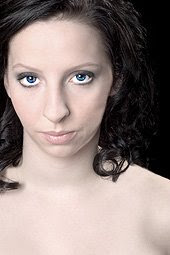 Mascara is a nice and simple way to make your lashes look longer make your eyes stand out. The ideal situation is that you have a great make-up artist for every shoot you do, and you don’t have to worry about mascara. But we all know, the world is not perfect, and sometimes you will have to do your own make-up. Then it’s good to know what you’re doing.
1) Practice first
Imagine you are at a shoot with the photographer you have been wanting to work with for quite some time. Now the make up artist does not show up and you have to apply mascara yourself. How happy would you be to find out that the great shots from this photo shoot are ruined by your lack of mascara skills? Don’t let that happen to you. Practice ‘till you drop. Make sure you can apply your mascara under any condition.
2) Apply powder before mascara
If you apply a powder before you apply your mascara, you will have less problems removing bits that fell off and prevent your mascara from running down.
3) Curl your eyelashes
Use an eyelash curler to curl your eyelashes before applying mascara. Different sources say different things about curling again after you applied the mascara. Try it at home first and see if it works for you.
4) Top to bottom
Apply mascara to the top side of your lashes, then the bottom side. This holds for both lashes. It is no important which one you do first
5) Tired?
If you are tired, you might want to use a brown mascara to create a warm effect. You may also want to put mascara on your upper lashes only to keep the view light.
6) Use fresh mascara
The stuff lasts for about three months, then it dries out. Don’t be cheap, replace your mascara in time. Make sure not to pump your mascara tube as it brings in air, which speeds up the drying. Instead, rotate the wand inside the tube.
7) Waterproof?
Limit the use of waterproof mascara. It comes of harder, which is bad for the soft skin around your eyes.
More references:
How to apply mascara, tutorial and video
Mascara guide (more tips)
Subscribe to:
Posts (Atom)